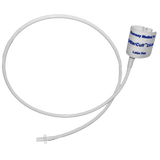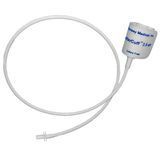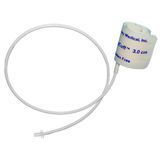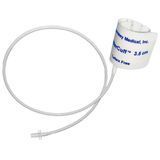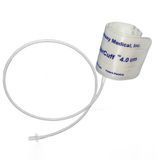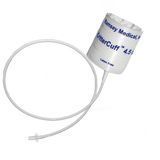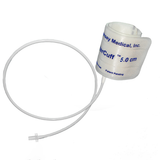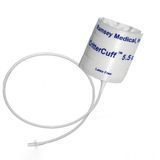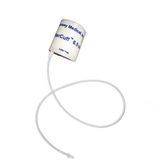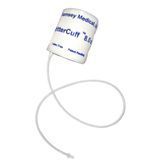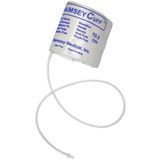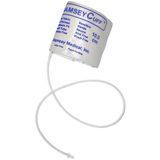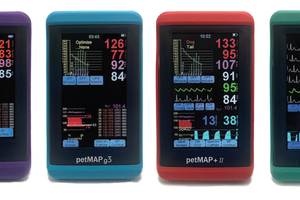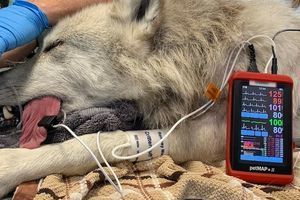
Accurate blood pressure measurement in animals depends directly on selecting the correct cuff. A cuff that's too small or too large can distort the reading, and incorrect placement can lead to injury or misdiagnosis. In this article, we explain how to choose the right veterinary cuff for a petMAP monitor.
.jpg)
Types of veterinary cuffs
Oscillometric cuffs are most commonly used in practice, applied to a limb or tail. All CritterCuffs™ designed for petMAP devices come with color-coded sizing and are divided into:
- Small sizes (2.0–5.5 cm);
- Large sizes (6.5–13.0 cm).
The correct size depends on the circumference of the tail or limb where the cuff will be placed.
How to select the correct size?
As a general rule, cuff width should be about 40% of the limb’s circumference. For example:
- for a limb with a 5 cm circumference, use a 2 cm cuff;
- for a 10 cm tail, use a 4 cm cuff.
Never use the same cuff for every patient. A personalized approach is essential for accurate diagnostics.

Cuff placement zones
You can apply the cuff on the:
- forelimb (above the carpus);
- hind limb (above the hock);
- tail (ideal for cats and small dogs).
The best site depends on the patient’s size, behavior, and the vet’s access. Tails are often used in restless animals.
Common mistakes when using cuffs
- using human cuffs — they’re not designed for animal anatomy or movement;
- incorrect placement — the cuff must be at heart level;
- loose attachment — leads to incorrect pressure readings.
Conclusion
Choosing the right cuff ensures accurate, safe, and comfortable blood pressure monitoring for animals. While petMAP monitors come with cuffs, we recommend purchasing additional CritterCuffs™ in various sizes. This allows you to measure patients of any breed or weight — from Yorkies to Labradors.